You wake up AM , the sun is shining into your bedroom and the city smells like summer. You really want to wear your favorite summer dress or short T-shirt. But something is stopping you and I know that many of us are familiar with this problem - chafed skin. It usually manifests itself in small red or white pustules on the upper arms, but also on the legs or bottom. This little supposed "blemish" is particularly annoying in summer because we would love to show a little more skin. That's why I want to explain to you in this article how chafed skin develops and, above all, what you can do about it!
But first, I’d also like to say: Put on that dress! Put on that short-sleeved T-shirt—and the skirt, of course! Do it! Despite the spots. Because it’s nothing bad, nothing contagious, and certainly nothing that should or can diminish your worth or your sense of well-being. This is purely an aesthetic issue, and since we’re already working on accepting ourselves just as we are, maybe this is a good place to start? Besides, for many people, stretch marks disappear on their own as they get older. So getting older does have its advantages after all!
But of course I understand you. Chafing skin is annoying and yes, as a sufferer you may sometimes think to yourself "How unfair, why do I have to have this?". At least I know this feeling very well. However, one thing in particular helps with some things: acceptance! But also following a few simple tips to take some of the "rubbing iron" off your skin.
What is chafing skin? Keratosis Pilaris - The permanent goose bumps
Rubbing iron skin is also known as keratosis pilaris or hyperkeratosis pilaris. It mainly occurs in women, but can also affect men.
Keratosis is the technical term for any type of keratinization disorder. More precisely, hyperkeratosis is a thickening and thus a keratinization disorder of the outermost skin layer, the stratum corneum. The skin produces too much Keratin!
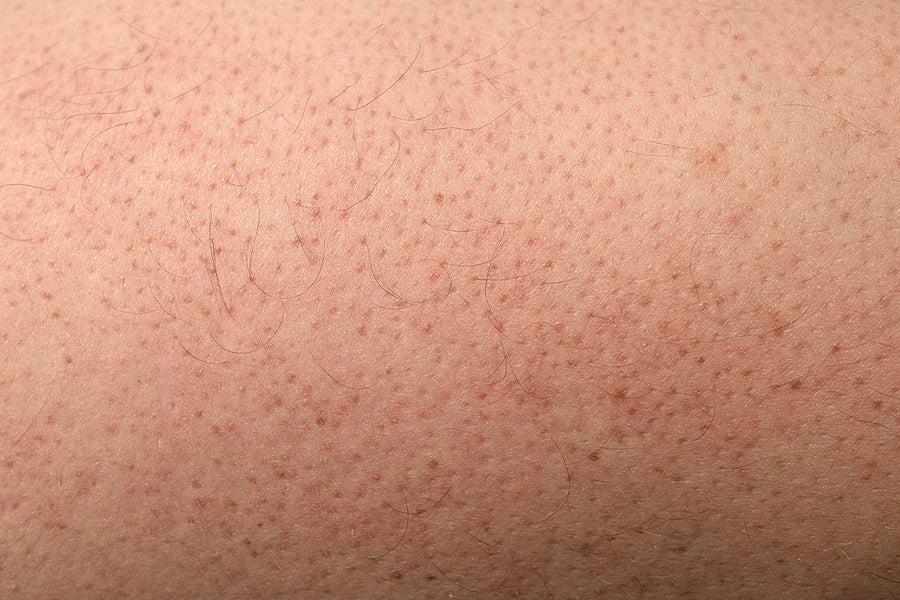
This keratinization mainly affects the hair follicles, which become keratinized from the inside, so to speak, and then clog up. The annoying skin nodules or small horny cones form. As already mentioned, the areas affected are the extensor sides of the upper arms (outside) and thighs (front), cheeks and also the buttocks.
Keratin always plays an important role in our body. As a component of the stratum corneum, it gives our skin stability and is also the basic building block for hair and nails. However, as with almost everything, "too much" is bad for us.
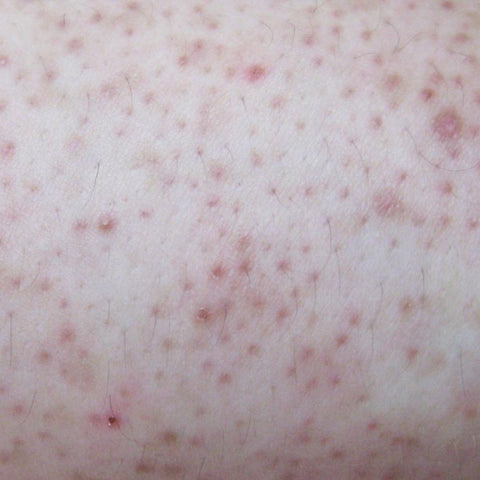
The result is rough, uneven, red patches on the skin that can also become inflamed. The skin barrier is damaged and bacteria can penetrate more easily. These areas are often hairless and look like goose bumps to the naked eye. Unfortunately, the skin irritation does not disappear with a little warmth.
The cornification disorder often occurs for the first time in childhood and adolescence. Over the years, however, it can disappear again by itself with the right care. As I have already mentioned, keratosis pilaris is only described as a cosmetic problem and is not considered a dermatological disease! Nevertheless, those affected can suffer greatly, which is why this topic is very important to me.
How do I recognize chafing skin?
Here is a compact summary:
Very rough, hairless areas
Small red or white bumps or horny cones on the skin
Frequently affected areas are the face, upper arms, thighs and buttocks
Natural skin barrier is impaired, which can lead to inflammation
Can occur as an accompanying syndrome in dry skin or allergic diseases
Deterioration of the skin condition in the winter months with low humidity - improvement in the sunny summer months
Example of chafed skin
If the affected areas continue to expand or the inflammation does not subside, I would definitely advise you to see a dermatologist!
Unfortunately, there is no miracle cure for chafed skin. If you have one, please let me know! :)
However, with the right skincare, you can definitely bring about an improvement, even out the skin somewhat and help yourself to feel more comfortable in your skin.
What can I do about chafed skin? 4 tips for smooth and soft skin